

Nicolas Patrick Nicolas Patrick

Report from 2036 - observing the modernisation of the justice system.

It is 2036 and justice is no longer experienced as a sequence of in-person attendances at court events. The physical elements of the justice system - registries, paper files, court rooms, sheriffs, and court clerks have largely disappeared, giving way to a digital eco-system that is accessible and user-friendly. Process, time and cost is proportionate to the value and complexity of the dispute being resolved. A glimpse into the future of justice reveals the architectural choices that underpinned transformative change and the benefits that flow from interoperability, digitally structured pathways, and carefully governed artificial intelligence.

What emerges is not a story of technological revolution, but of policy pragmatism in the face of inevitability.

Justice systems are entering a period of structural redesign. Advances in artificial intelligence, digital identity, and public data architecture have reshaped how societies resolve disputes and enforce obligations.

A View from the Near Future

It is 2036. Justice is no longer experienced primarily as a sequence of court events. For most citizens and businesses, it functions as a responsive public service — accessible through secure digital channels, capable of directing matters toward resolution pathways proportionate to their complexity.

All processes are digital by default. Paper, handwritten signatures, in person attendances have disappeared in relation to virtually all civil disputes, right up to the hearing, and in most cases hearings are also conducted online, or based on filed evidence and submissions.

Very few disputes reach a traditional hearing. Instead, they enter structured digital resolution environments designed to clarify issues early, support negotiation, and narrow contested questions. AI tools support all parties to understand the relative strength of their case, predict the likelihood of success, and the range of potential outcomes. All of this occurs mostly prior to judicial attention, and results in high rates of settlement.

Proportionality is no longer aspirational. It is embedded in the architecture.

Simple matters conclude within weeks. Intermediate disputes resolve within months. Only the most complex cases occupy extended judicial time — and even these benefit from clearer evidentiary records assembled through structured digital processes.

Timeliness, particularly in the resolution of small civil matters, is viewed as a critical element of a fair justice system and is a visible expression of institutional legitimacy.

Artificial Intelligence as Enabling Capability

Artificial intelligence operates quietly within the infrastructure, largely invisible to users but materially shaping system performance. It assists with document analysis, identifies relevant precedents, supports scheduling, monitors compliance, and helps surface emerging risks within large datasets.

AI tools also play a critical role in identifying users with vulnerabilities or special needs. Once identified these users are connected to appropriate support services, such as community legal centres and domestic violence support services, for example.

Crucially, judicial authority remains human.

No binding determination is made without accountable decision-makers, but judges also benefit from the availability of AI tools, which provide case summaries, map inconsistencies or evidentiary gaps, assess the relative strengths and weaknesses of the parties position etc. All automated processes are reviewable and contestable by design. Over time, public confidence has grown not because machines replaced judgment, but because governance frameworks ensured suitable guardrails were in place and that judgment remained transparent.

The early fear that automation might erode fairness proved misplaced. Properly governed, it strengthened consistency while allowing human expertise to concentrate where it matters most.

Resolution as an Ecosystem

What distinguishes this modern system is not technology alone, but integration.

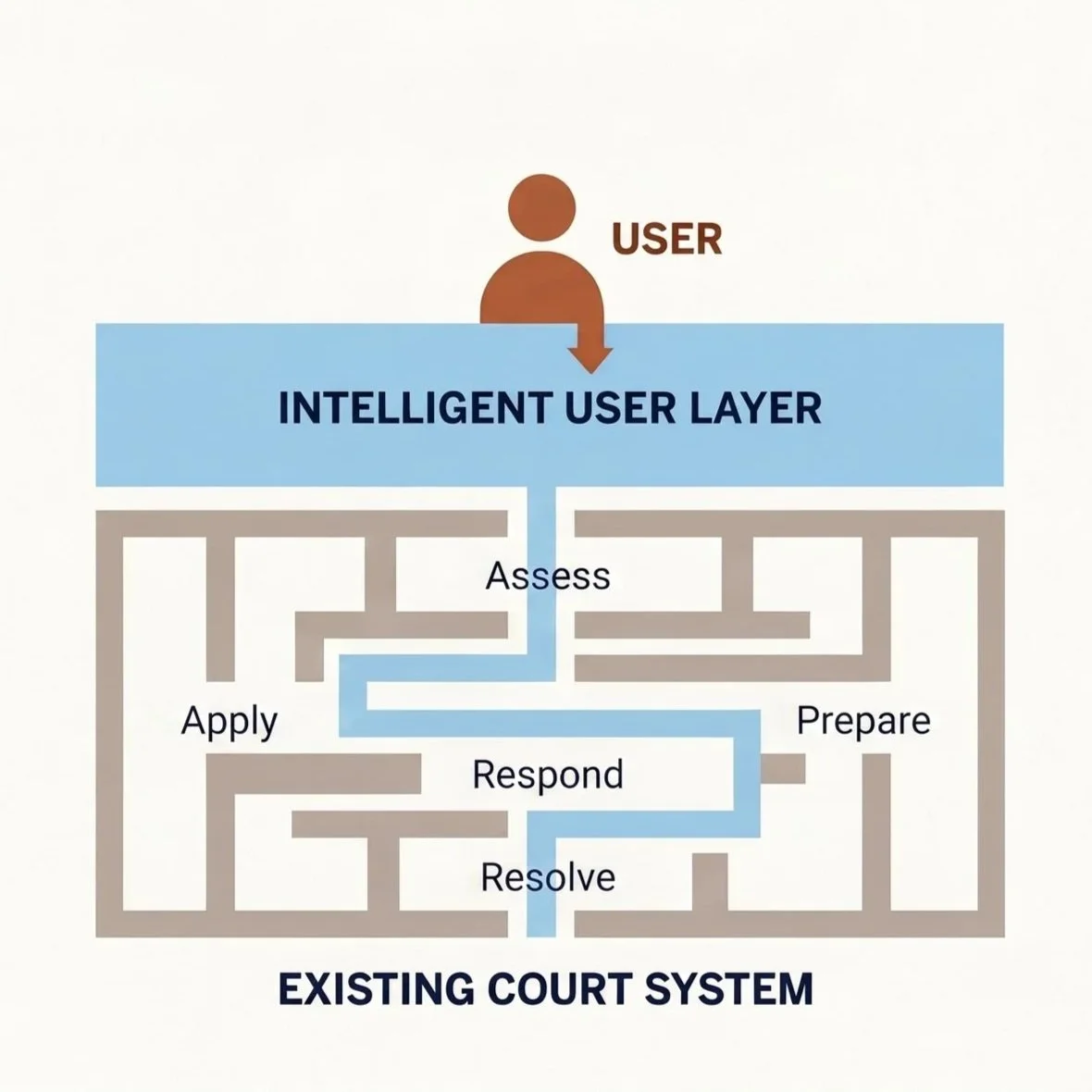
Courts, tribunals, regulatory bodies, enforcement agencies, and administrative platforms now operate as components of a broader resolution ecosystem. Matters move across institutional boundaries without requiring citizens to navigate those boundaries themselves.

Secure interoperability with identity frameworks enables reliable participation. Payment rails support immediate compliance with financial orders. Regulatory data reduces duplication. Enforcement actions occur with fewer procedural delays. One of the features most appreciated by users is the application of the once only principle - you only ever need to supply a document once. This applies across the entire justice ecosystem-system, and even more impressively the principle applies across all government departments and agencies.

For users, the system feels coherent rather than fragmented.

This coherence has become a quiet marker of state capability.

Public Authority, Private Capability

The infrastructure is publicly governed but not exclusively publicly built. Carefully structured partnerships allow private technological capability to support innovation while judicial independence and democratic accountability remain intact.

Standards, rather than ownership, determine participation. Multiple providers operate within defined governance frameworks, ensuring resilience without compromising authority.

The early policy debates proved decisive here. Jurisdictions that clarified these boundaries attracted sustained investment while preserving public trust.

The judiciary remain independent and fully funded by the government, but the technology infrastructure was modernised by the private sector, financed by debt and equity underwritten by government guarantees as to dispute volumes passing through the system, similar in structure to the creation of PEXA in the property transaction space.

Economic and Social Effects

As resolution timelines shortened, secondary effects have become visible. Businesses price risk with greater confidence. Contracting activity has expand. Citizens engage more readily with formal processes they perceive as accessible rather than forbidding.

Justice functions more recognisably as economic infrastructure. It is no longer a cost to the government.

Perhaps most importantly, compliance with settlement agreements and judgments very high, because financial orders can be automatically enforced through integration with other government functions including Revenue NSW and the ATO. Orders that translate predictably into outcomes reinforce institutional credibility — and credibility, once strengthened, tends to compound.

What Made the Transition Possible

Looking back, the transformation was less about technological breakthrough than institutional choice.

Governments that approached redesign architecturally — rather than layering digital tools onto legacy processes — avoided the trap of incrementalism. Governments established parallel digital jurisdictions, allowing capability to scale, giving users a choice of fora and without shutting or destabilising existing courts. Over time, volumes shifted naturally toward the environments best suited to handle them.

Shifting platform operational responsibility to approved and regulated private sector actors, also allowed innovation to take place without the constraints associated with dependence on budget allocation from the public purse.

The legitimacy of the justice sector has survived because judicial authority and independence, good governance, and accountability are designed into the eco-system. The transition to a modern digital justice eco-system kept access to justice as the central principle and North Star, ensuring the system was designed to meet the needs of the user.

The Enduring Question

The future was shaped by a belief that an effective system of justice was critical infrastructure — worthy of the same deliberate design applied to transport, energy, and financial systems.

From vantage point of 2036, this appears less visionary than pragmatic. As societies grow more complex, the infrastructures that sustain trust and underpin productivity must evolve accordingly.

The justice transformation occurred not for efficiency’s sake, but because it faced a crisis of legitimacy, and legitimacy, as ever, is the currency upon which durable institutions depend.

Justice systems are entering a period of structural redesign. Advances in artificial intelligence, digital identity, and public data architecture have reshaped how societies resolve disputes and enforce obligations. What once appeared administratively complex is increasingly understood as a question of institutional architecture — how authority is exercised, how decisions are governed, and how legitimacy is sustained at scale.

A View from the Near Future

It is 2036. From this vantage point, the most striking development is not the technology itself, but the quiet reconfiguration of institutional practice. Justice is no longer experienced primarily as a sequence of court events. For most citizens and businesses, it functions as a responsive public service — accessible through secure digital channels and capable of directing matters toward resolution pathways proportionate to their complexity and consequence.

Processes are digital by default. Paper, handwritten signatures, and routine in-person attendances have largely receded from civil justice. Hearings persist where they add procedural value, but many matters are determined on structured digital records supported by filed evidence and submissions.

Very few disputes proceed directly to a traditional hearing. Instead, matters increasingly enter structured resolution environments designed to clarify issues early, support negotiation, and narrow contested questions before judicial attention is required. Analytical tools assist parties in understanding the relative strength of their positions, the likelihood of success, and the plausible range of outcomes. Much of this occurs upstream of adjudication, contributing to sustained settlement rates.

Proportionality is embedded in the architecture rather than treated as an aspiration. Simpler matters often conclude within weeks. Intermediate disputes resolve within months. Only the most complex cases occupy extended judicial time, and even these benefit from clearer evidentiary records assembled through structured processes.

Timeliness — particularly in lower-value civil matters — is increasingly understood as a component of procedural fairness and a visible expression of institutional legitimacy.

Artificial Intelligence as Enabling Capability

Artificial intelligence operates largely in the background of the infrastructure, materially shaping system performance without displacing human authority. It supports document analysis, identifies relevant precedents, assists with scheduling, monitors compliance, and helps surface risks within large datasets.

These systems also assist in identifying users who may require additional support. Where indicators of vulnerability appear, individuals are more readily connected to appropriate services, including legal assistance and specialist community organisations. Access to justice is therefore addressed not only through court process, but through coordinated institutional response.

Judicial authority remains human. Binding determinations continue to rest with accountable decision-makers, supported — but not supplanted — by analytical tools that provide case summaries, map evidentiary gaps, and clarify points of contention. Automated processes are reviewable and contestable by design.

Early concerns that automation might erode fairness have, in many jurisdictions, given way to a more measured assessment: when governed appropriately, these capabilities have strengthened consistency while allowing human expertise to concentrate where judgment is most consequential.

Resolution as an Ecosystem

What distinguishes the contemporary system is less the presence of technology than the degree of institutional integration.

Courts, tribunals, regulatory bodies, enforcement agencies, and administrative platforms increasingly operate as components of a broader resolution ecosystem. Matters move across institutional boundaries with reduced need for users to interpret those boundaries themselves.

Secure interoperability with identity frameworks supports reliable participation. Payment infrastructure enables prompt compliance with financial orders. Regulatory data reduces duplication and procedural friction. Enforcement actions occur with greater administrative continuity.

One widely observed feature is the practical application of the “once-only” principle: individuals and businesses typically supply core documentation a single time, with authorised reuse across the justice system and, in some jurisdictions, across government more broadly. For users, the system is experienced less as a series of institutional encounters and more as a coherent public function.

This coherence has become a quiet indicator of state capability.

Public Authority, Private Capability

The infrastructure is publicly governed but not exclusively publicly built. Carefully structured partnerships allow private technological capability to contribute to system modernisation while judicial independence and democratic accountability remain intact.

Standards — rather than ownership — increasingly determine participation. Multiple providers operate within defined governance frameworks, supporting resilience without diluting public authority. Early policy choices proved consequential: jurisdictions that clarified these boundaries tended to attract sustained investment while preserving public trust.

The judiciary remains independent and publicly funded, while elements of the technological infrastructure have, in some instances, been financed through debt and equity supported by government volume guarantees — arrangements analogous to earlier national infrastructure initiatives. Such models have enabled innovation without complete dependence on annual public expenditure cycles.

Economic and Social Effects

As resolution timelines shortened, secondary effects became more visible. Businesses priced risk with greater confidence. Contracting activity expanded. Citizens engaged more readily with formal processes they increasingly perceived as accessible rather than forbidding.

Justice came to function more recognisably as economic infrastructure — part of the operating machinery that supports transactional confidence and social stability — rather than solely as an administrative cost centre.

Compliance with settlements and judgments improved in many environments, aided by more reliable links between adjudicative outcomes and enforcement mechanisms. Financial orders that translate predictably into real-world effect tend to reinforce institutional credibility, and credibility, once strengthened, often compounds.

What Made the Transition Possible

Looking back, the shift appears less a product of technological breakthrough than of institutional choice.

Governments that approached redesign architecturally — rather than layering digital tools onto legacy processes — were generally better positioned to avoid the limits of incrementalism. Several established parallel digital jurisdictions, allowing capability to scale while existing courts continued to operate. Over time, user behaviour and case volumes gravitated toward the environments best suited to particular dispute types.

In some contexts, transferring defined operational responsibilities to regulated private actors supported innovation while maintaining public oversight.

Institutional legitimacy endured because judicial independence, governance, and accountability were designed into the ecosystem from the outset. Access to justice remained a central organising principle, shaping pathway design and reinforcing the system’s orientation toward user need rather than procedural inheritance.

The Enduring Question

The trajectory of reform was shaped by a growing recognition that an effective justice system constitutes critical national infrastructure, deserving of the same deliberate design historically applied to transport, energy, and financial networks.

From the vantage point of 2036, this recognition appears less visionary than pragmatic. As societies grow more complex, the infrastructures that sustain trust and underpin productivity must evolve accordingly.

Justice did not become more responsive solely in pursuit of efficiency. It adapted because institutions confronted a mounting legitimacy challenge — and legitimacy remains the currency upon which durable public systems depend.

Read More
Nicolas Patrick Nicolas Patrick

Born-Digital Courts and the Architecture of Modern Justice

Justice systems are increasingly recognised as foundational public infrastructure — supporting economic participation, transactional confidence, social stability, and public trust. As dispute landscapes evolve in scale and complexity, policymakers in many jurisdictions have begun to question whether digitising inherited processes alone is sufficient. Without architectural redesign, digital layers risk reproducing analogue constraints within new interfaces. The central question is therefore institutional rather than technological: how should justice systems — not merely courts — be structured to remain legitimate, accessible, and governable within a digitally capable society?

From the vantage point of 2026, one development is becoming more visible. Some of the most consequential advances appear to have emerged less from attempts to modernise legacy forums than from the creation of digitally native jurisdictions operating initially in parallel with established institutions.

Parallel Capability as Institutional Strategy

Early reform efforts often sought to migrate analogue workflows into digital environments. While such initiatives frequently improved administrative efficiency, they were often shaped by procedural inheritance and organisational architecture.

Rather than attempting wholesale conversion, several jurisdictions have experimented with establishing new statutory forums designed for digital operation from inception, allowing legacy courts to continue while defined categories of matters shift into purpose-built environments.

This parallel capability model has often been understood as a way to reduce transition risk: continuity preserves institutional confidence while enabling innovation under controlled conditions. Digital jurisdictions can commence with narrower mandates — frequently targeting high-volume, lower-complexity disputes — thereby supporting earlier deployment and operational learning.

The implications are not solely technological. Where lower-complexity matters are routed into proportionate pathways, legacy courts may be better positioned to concentrate judicial attention on disputes requiring authoritative determination — an outcome frequently associated with improved system governability.

Over time, user behaviour appears responsive to procedural clarity. Where pathways are more navigable and participation less burdensome, volumes may gravitate toward the digital forum. Institutional evolution in such settings tends to occur less through abrupt transition than through demonstrated reliability.

Designing for Proportionality

Digitally native courts create conditions in which proportionality can operate as a structural principle rather than solely as a discretionary aspiration.

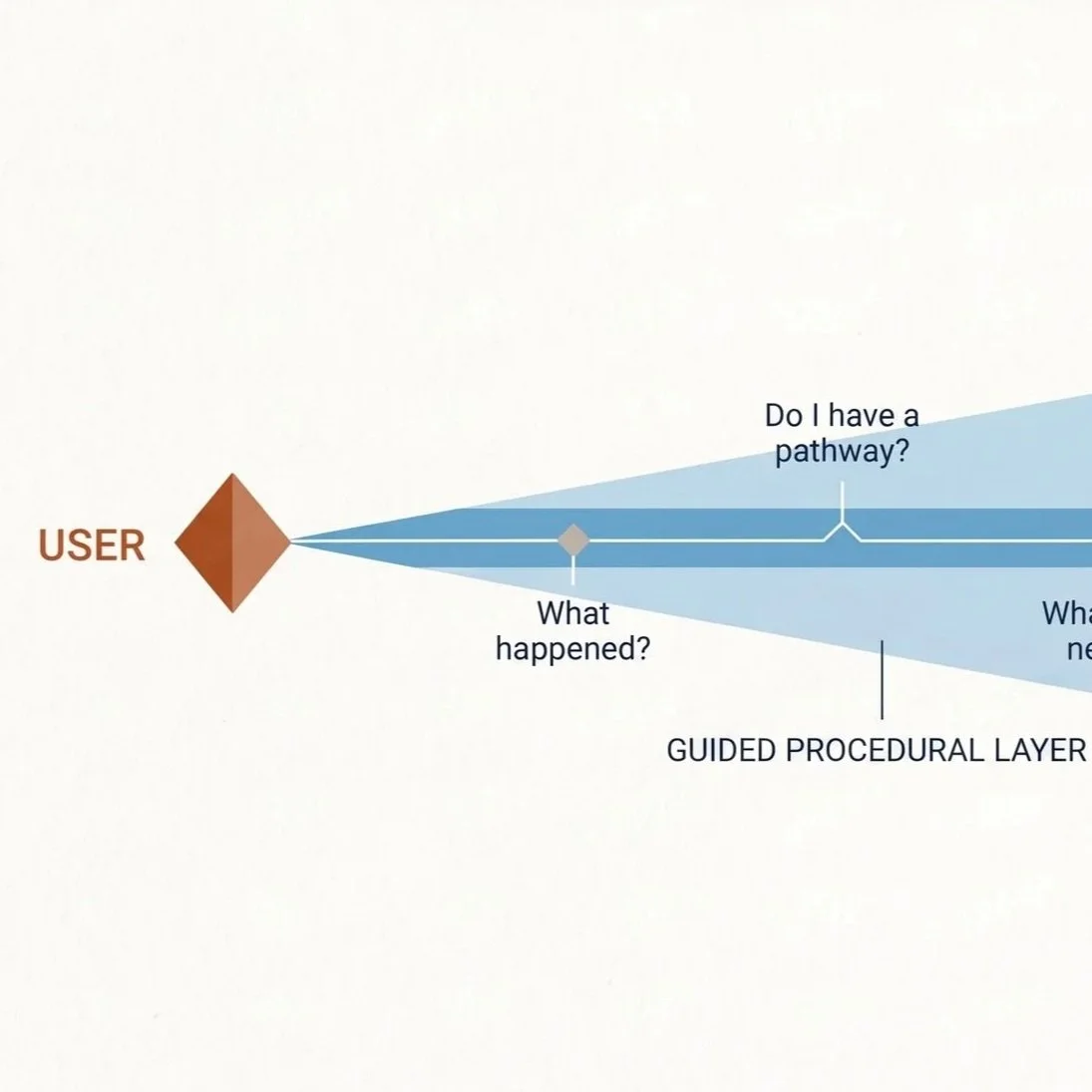
Matters may enter through structured intake processes capable of directing disputes toward pathways aligned with their complexity and consequence. Many disputes can resolve through facilitated negotiation or administrative determination supported by structured records, while others escalate with issues clarified and evidentiary materials organised.

In some digitally enabled environments, simpler matters have proven capable of concluding within weeks, with intermediate disputes resolving within months. Judicial time is thereby more likely to be reserved for questions requiring authoritative determination.

For users, timeliness increasingly functions as an element of fairness — particularly where delay has historically limited participation. Access to justice expands less through doctrinal change than through system design.

Artificial Intelligence Within Governed Boundaries

Within digitally native environments, artificial intelligence is increasingly positioned as enabling infrastructure rather than as a substitute for human authority.

Analytical tools may support document review, identify relevant precedents, map areas of factual dispute, and assist with scheduling and compliance monitoring. Early-stage evaluation tools can help parties understand the relative strength of their positions, potentially contributing to higher rates of pre-hearing resolution.

Governance frameworks have tended to mature alongside capability. Automated processes are typically expected to remain reviewable and contestable, while binding determinations continue to rest with accountable decision-makers. Transparency obligations clarify how analytical outputs inform — but do not dictate — outcomes.

Early concerns that algorithmic tools might erode procedural fairness have increasingly been met with a more conditional conclusion: where governed appropriately, such capabilities can strengthen consistency while allowing human expertise to concentrate where judgment is most consequential.

The emerging lesson is straightforward — institutional legitimacy depends less on whether advanced tools are used than on whether their deployment remains transparent, bounded, and aligned with public authority.

Integration Into a Wider Resolution Ecosystem

As digital jurisdictions mature, their significance may extend beyond individual courts. They increasingly lend themselves to operation within a broader resolution ecosystem.

Where implemented, secure interoperability allows matters to move more seamlessly between courts, tribunals, regulatory bodies, and enforcement agencies. Identity frameworks support reliable participation. Payment infrastructure can enable more immediate compliance with financial orders. Authorised data reuse reduces duplication and administrative friction.

In some public-sector contexts, the “once-only” principle — whereby individuals provide core information a single time for authorised reuse — has begun to shape digital service design.

For citizens and businesses, justice in such environments may be experienced less as a sequence of institutional encounters and more as a coherent public function — a characteristic often associated with advanced administrative capacity.

Public Authority and Private Capability

The emergence of digital jurisdictions does not necessarily displace public authority. Courts remain independent and publicly accountable. At the same time, some governments have explored whether technological infrastructure can be financed, built, or operated through carefully structured partnerships without compromising judicial legitimacy.

Standards increasingly govern participation, enabling multiple providers to operate within visible regulatory boundaries while preserving institutional control.

Jurisdictions that clarify these boundaries early are often considered better positioned to attract sustained investment while maintaining public confidence.

Economic and Institutional Effects

Improved predictability has long been associated with stronger economic participation, and similar dynamics appear increasingly relevant in justice contexts.

Where resolution timelines shorten and participation barriers decline, secondary effects may include greater contracting confidence, expanded commercial activity, and higher engagement with formal processes.

Compliance tends to improve where adjudicative outcomes translate reliably into real-world effect. Institutional credibility, once strengthened, often compounds.

Justice in such environments begins to function more recognisably as economic infrastructure — part of the operating machinery through which complex societies sustain trust.

Why the Transition Appears to Succeed

Experience increasingly suggests that institutional design — rather than technological breakthrough alone — shapes reform trajectories.

Governments that approach redesign architecturally, establishing parallel capability while embedding governance from the outset, appear better positioned to avoid many of the limits associated with incremental digitisation.

Legacy courts continue to serve an essential constitutional role. Alongside them, digitally native jurisdictions illustrate how proportional pathways, governed analytical capability, and user-centred architecture can operate together at scale.

What begins as parallel innovation may gradually assume the characteristics of integrated infrastructure.

The Emerging Baseline

From today’s vantage point, digitally native courts appear less experimental than pragmatic — reflecting a broader recognition that justice constitutes infrastructure deserving deliberate design.

As societies grow more complex, the institutions that sustain trust must evolve accordingly. Continuity is preserved not by retaining inherited forms unchanged, but by renewing architecture so that enduring principles remain operable under new conditions.

Justice does not become more responsive solely in pursuit of efficiency. It adapts because legitimacy — the currency upon which durable public systems depend — requires it.

Endnotes — Foundational Sources

These works collectively support the institutional, economic, and governance propositions reflected throughout the article.

  1. World Bank. World Development Report 2017: Governance and the Law. — Establishes the relationship between legal institutions, economic participation, and state legitimacy.

  2. OECD. Equal Access to Justice for Inclusive Growth (2019). — Documents access-to-justice gaps and links effective justice systems to economic and social outcomes.

  3. OECD. Digital Government Review series. — Provides analysis of interoperability, “once-only” principles, and digital public infrastructure.

  4. Lord Briggs. Civil Courts Structure Review (UK, 2016). — Advocates the creation of an Online Court and highlights the limits of incremental digitisation.

  5. Richard Susskind. Online Courts and the Future of Justice (2019). — Examines digitally native courts, proportional pathways, and technology-enabled dispute resolution.

  6. Hazel Genn. Paths to Justice (1999) and subsequent legal needs surveys. — Demonstrates how cost, complexity, and delay constrain access to justice.

  7. Canadian Action Committee on Access to Justice in Civil and Family Matters. — Frames access to justice as a systemic design challenge.

  8. Tyler, T. Why People Obey the Law (1990). — Foundational work linking procedural fairness to institutional legitimacy.

  9. World Justice Project. Rule of Law Index. — Connects predictable legal systems with economic confidence and social stability.

  10. National Center for State Courts (NCSC). Research on online dispute resolution and court modernisation.

Read More
Nicolas Patrick Nicolas Patrick

Institutional Design and the Capacity of Modern States

Institutional design shapes how authority is exercised long before policy is debated. When architecture aligns legitimacy, accessibility, and accountability, public systems become easier to navigate and more resilient under strain. This essay examines how capable states approach institutional renewal — not through disruption, but through deliberate design that preserves trust while enabling adaptation.

In periods of technological and social change, public debate often centres on policy reform, regulatory updates, or organisational efficiency. Less frequently examined, yet ultimately more consequential is institutional design: the structuring of public systems so they remain legitimate, governable, and capable under evolving conditions.

Institutions rarely fail abruptly. More often they drift, carrying responsibilities beyond the assumptions embedded in their original architecture. When this occurs, performance challenges are often misdiagnosed as operational shortcomings rather than design mismatches.

Institutional design is therefore not an abstract exercise. It is the quiet discipline through which states preserve capability.

From Institutional Form to System Design

Historically, many public institutions were constructed for stability. Their procedures assumed predictable demand, slower economic cycles, and incremental doctrinal change. Those assumptions no longer consistently hold.

Rising transaction volumes, cross-border commerce, digital expectations, and increasingly complex regulatory environments have placed structural pressure on institutional arrangements originally designed for a different era.

The appropriate response is not disruption for its own sake. Nor is it the wholesale importation of private-sector operating models into public authority.

Rather, it is stewardship through conscious design: clarifying roles, simplifying pathways, aligning authority with function, and ensuring that legitimacy scales alongside capability.

Effective institutional design recognises a central principle: trust is produced by architecture, not communications.

Legitimacy as a Design Outcome

Institutional trust is sometimes treated as a cultural attribute, or something to be maintained through transparency statements or public engagement. Yet trust is more reliably understood as the product of visible fairness, intelligible processes, and accountable authority.

When escalation pathways are clear, when decisions are reviewable, and when participation does not impose disproportionate burden, legitimacy tends to accumulate.

Conversely, opacity, delay, and procedural friction gradually erode confidence, even where individual decision-makers perform conscientiously.

For institutional leaders, the implication is straightforward: legitimacy must be designed into the system itself.

Designing for Proportionality

One of the most durable organising principles in contemporary institutional design is proportionality in the alignment of process intensity with the significance and complexity of the matter at hand.

Highly capable systems do not treat all cases alike. Instead, they differentiate early, routing matters toward pathways commensurate with their consequence.

This approach preserves scarce expert capacity for questions that genuinely require authoritative determination, while enabling earlier resolution where structured support is sufficient.

Proportional design is therefore not primarily about efficiency. It is about institutional judgment, deciding where formality is essential and where accessibility should prevail.

Adaptability Over Finality

Institutions have traditionally been engineered for permanence. Yet durability in modern governance increasingly depends on adaptability rather than rigidity.

Designing for adaptability does not imply constant restructuring. It means creating systems capable of absorbing new technologies, evolving expectations, and shifting demand without destabilising core authority.

Modular architecture, interoperable infrastructure, and clearly defined governance boundaries allow institutions to evolve without appearing unsettled.

Where adaptability is absent, reform tends to occur reactively often under the pressure of backlog, affordability concerns, or declining public confidence.

Where adaptability is present, change is more often deliberate.

Parallel Capability as a Strategy for Renewal

A recurring feature of successful institutional modernisation is the development of parallel capability by establishing new environments alongside legacy structures rather than attempting immediate conversion.

Parallelism protects continuity while enabling controlled experimentation. Existing institutions continue to perform essential functions, preserving public confidence, while newly designed pathways demonstrate reliability over time.

Institutional evolution then occurs not through abrupt transition but through observable performance.

Importantly, this approach reframes reform as institutional maintenance rather than institutional critique. This is a distinction that often proves decisive in securing stakeholder support.

Technology as a Design Force, Not the Design Itself

Technological capability now exceeds what many public institutions have fully integrated. Yet technology alone does not resolve structural constraints.

When introduced without architectural reconsideration, digital layers can replicate analogue friction within more sophisticated interfaces.

The design question is therefore prior to the technology question:

What institutional form allows these capabilities to operate legitimately?

Where governance frameworks are clear, human authority remains visible, and oversight is routine, technology tends to strengthen consistency and administrative coherence.

Where these conditions are absent, capability can outpace legitimacy.

The lesson is not to slow technological adoption, but to embed it within deliberate institutional design.

Public Authority in a Multi-Provider Environment

Modern institutional infrastructure increasingly involves structured collaboration between public authority and external capability including technical providers, regulated operators, and specialist service partners.

This need not dilute accountability. On the contrary, clearly defined participation standards often strengthen resilience while preserving institutional control.

The objective is not marketisation of public functions, nor the displacement of state authority. It is the careful orchestration of capabilities under governance arrangements that protect fairness and the public interest.

Well-designed systems treat plurality as a source of strength, provided the architecture remains coherent.

Institutional Timing and Strategic Windows

Moments of institutional redesign rarely announce themselves dramatically. More often, they emerge when technological readiness, public expectation, and policy attention converge.

Jurisdictions that recognise these windows (and approach them with design discipline rather than urgency) tend to achieve reform without unsettling foundational confidence.

Leadership in institutional design is therefore less theatrical than it is attentive. It involves recognising when inherited assumptions no longer align with contemporary demand, and acting before reactive change becomes unavoidable.

Institutional Design as State Capability

Ultimately, institutional design is inseparable from state capability.

High-capacity states are distinguished not only by the quality of their policies, but by the coherence of the systems through which those policies operate.

When institutional architecture aligns authority, accessibility, and accountability, public systems become easier to navigate, more predictable to rely upon, and more resilient under pressure.

Such outcomes rarely attract headlines. Yet they form part of the operating machinery through which complex societies sustain trust.

A Quiet Discipline

Institutional design seldom presents as ideological reform. More often, it is experienced as relief — reduced friction, clearer pathways, more dependable outcomes.

Its successes are typically measured not in moments of transformation but in the absence of crisis.

For contemporary governments, the question is no longer whether institutions must adapt, but whether that adaptation will occur deliberately or reactively.

Design, in this sense, is an expression of stewardship, and stewardship remains one of the defining responsibilities of capable states

Read More
Nicolas Patrick Nicolas Patrick

AI arrives in the Courts

Courts are adopting AI not as a single reform program, but through a growing set of tools: guided filing, triage, translation, transcription, scheduling optimisation, decision support, and drafting assistance. Many of these tools will be invisible to court users. Collectively, they reshape how public authority is exercised: what is seen, what is prioritised, what is delayed, and what becomes decisive. This piece offers a practical taxonomy of court AI, a simple test for measuring how much authority a tool exercises in practice, and concrete governance requirements that preserve legitimacy: disclosure, contestability, auditability, and human responsibility built into workflow and procurement. The aim is not to slow adoption, but to ensure that modernisation increases capability without outsourcing accountability.

1. The shift is already underway

Courts are adopting artificial intelligence less as a single “modernisation program” than as a series of incremental tool decisions: a triage widget here, an automated form there, a transcription contract, a translation feature, an analytics dashboard. Each tool appears operational. Collectively, they change how public authority is exercised.

This shift is often misunderstood as a technology upgrade. It is more accurately a change in institutional operating form. When AI tools are embedded into intake pathways, scheduling, evidentiary handling, prioritisation, or drafting, they shape what is seen, what is asked, what is delayed, and what is treated as decisive. That is a governance problem before it is an engineering problem.

The central question is therefore not whether courts should use AI. It is how to ensure that when they do, authority remains legible and accountable—to parties, to judges, to the public, and to the legal system’s own standards of procedural fairness.

2. A practical taxonomy: what “AI in courts” actually means

Court AI is best understood as a set of distinct tool types, each with different risk profiles and governance requirements.

(a) Administrative automation

Tools that reduce friction without materially shaping outcomes:

  • smart forms and guided filing

  • document classification and routing

  • transcription and translation support

  • scheduling optimisation

  • duplicate detection and basic fraud flags

These tools can still cause harm—particularly through exclusion, accessibility failures, or systematic error—but their influence is primarily on process.

(b) Decision support

Tools that influence prioritisation, resource allocation, or the framing of decisions:

  • triage and suitability screening

  • risk/priority scoring

  • settlement likelihood or “case complexity” estimates

  • prompts that suggest next procedural steps

Decision support is where automation bias becomes a structural risk. Even if the final decision-maker is human, the tool can strongly shape the path taken.

(c) Drafting and synthesis

Tools that produce text that may be relied upon:

  • summarising submissions and evidence

  • generating draft reasons, orders, or correspondence

  • producing “issues lists” or proposed findings

Drafting tools can be safe in bounded settings, but they require controls against plausible-sounding error and false completeness.

(d) Integrity and compliance tooling

Tools that enforce rules:

  • identity verification and liveness checks

  • anomaly detection (repeat litigants, templated claims, suspected fabrication)

  • document provenance and chain-of-custody workflows

  • monitoring for prohibited content or coercion indicators

These tools can protect courts, but can also embed contested assumptions about risk, credibility, and normality.

This taxonomy matters because “AI” is not a single governance object. Courts need differentiated guardrails that match the authority a tool effectively exercises.

3. The governance test: how much authority does the tool exercise?

A useful governance test is simple:

What authority does this tool exercise in practice, not in theory?

Four dimensions help locate that authority:

  1. Outcome influence: Does it affect merits or only administration?

  2. Reversibility: Can an individual easily correct or contest the tool’s output?

  3. Opacity: Can parties and supervisors see why the tool produced its result?

  4. Scale: Does an error affect one case, or produce systemic skew across thousands?

A scheduling optimiser that shifts hearing dates is not the same as a triage model that filters claims as “unsuitable”, or a drafting tool that produces reasons that a judge edits under time pressure. Governance must be calibrated accordingly.

4. Why generative tools require special restraint

Generative systems bring distinctive benefits: they interpret natural language narratives, produce plain-English explanations, generate drafts at scale, and reduce administrative load. For courts, that can translate into improved access for self-represented litigants and lower rates of defective filings.

But generative systems also bring distinctive failure modes. In small-claims triage testing, it is possible for an assistant to identify suitability correctly in some matters yet miss determinative defects (for example, capacity of a proposed respondent or an expired limitation period), while still producing text that appears coherent and complete.

These are not edge cases; they are characteristic errors of probabilistic text generation in high-stakes procedural settings:

  • False completeness: fluent answers that omit critical legal conditions.

  • Context drift: attention weights can overvalue recent/salient details, weakening chronology handling and multi-factor tests.

  • Domain mismatch: narrative plausibility can be mistaken for legal sufficiency.

  • Silent failure: the tool rarely signals uncertainty in a way lay users can interpret.

The lesson is not “generative AI is unusable.” The lesson is that courts must design for bounded usestructured outputs, and contestability by default.

5. Six practical examples—and what governance looks like in each

The following examples are intentionally concrete. Each identifies (i) what the tool does, (ii) what can go wrong, and (iii) the minimum governance conditions that preserve legitimacy.

Example 1: Guided filing assistant for self-represented litigants

Tool function: Converts a narrative into structured fields; flags missing documents; proposes next steps.

Failure mode: The assistant misclassifies the dispute type, fails to identify jurisdictional thresholds, or discourages a valid claim due to overconfident generalisation.

Minimum governance:

  • “No-train, no-retain” by default for user content, with court-controlled hosting or an equivalent regime that prevents reuse of personal data for vendor training. Nicolas PATRICK M4U2 Assignment…

  • Clear separation between information and advice: explain the process, not the merits.

  • Structured prompts and constrained outputs: the model should fill templates, not improvise doctrine.

  • Escalation triggers: if the user indicates family violence, vulnerability, language barriers, or urgency, the pathway must route to human assistance.

  • Auditability: logging that enables later review of what the tool asked and what it suggested.

Example 2: Triage/suitability screening for claims

Tool function: Flags defective filings; suggests dismissal pathways for out-of-time or clearly non-justiciable claims.

Failure mode: Systematic filtering of valid but atypical claims; automation bias leading staff to treat flags as decisions.

Minimum governance:

  • Tool outputs must be advisory, never dispositive, unless authorised through explicit policy and rule change.

  • Two-channel review: triage flags require a human confirmation step and a reason code.

  • Disclosure model: parties should be told when a triage tool materially affected routing or timing, at least at a category level.

  • Performance monitoring: track false negatives/positives and error distribution across protected or disadvantaged groups.

  • Contestability: a simple mechanism to request human reconsideration.

Example 3: Transcription and translation support

Tool function: Produces draft transcripts; supports interpretation and accessibility.

Failure mode: Subtle translation or transcription errors that distort meaning; uneven performance across accents, dialects, or code-switching.

Minimum governance:

  • Tiered reliability thresholds: define when human review is mandatory (e.g., contested evidence, credibility issues, or sentencing).

  • Correction protocol: parties can propose corrections with a structured process.

  • Provenance markers: transcripts clearly label machine-generated sections and confidence.

  • Equality testing: evaluate performance across language groups and speech patterns, not only averages.

Example 4: Scheduling optimisation and resource allocation

Tool function: Allocates hearing dates, prioritises lists, manages backlogs.

Failure mode: Optimisation can encode value judgements—e.g., prioritising throughput over fairness, or disadvantaging those who need interpreters, accommodations, or remote participation.

Minimum governance:

  • Published scheduling principles (what the optimiser is trying to maximise and what it is constrained from doing).

  • Fairness constraints embedded into optimisation objectives (not added as afterthoughts).

  • Review rights for parties where listing materially affects outcomes.

  • Transparency to leadership: regular reporting on distributional effects.

Example 5: Decision-support scoring (risk/priority/complexity)

Tool function: Produces scores that guide sequencing, supervision intensity, or intervention.

Failure mode: Scores become de facto decisions; staff defer even when they disagree; the system inherits historical bias in training data.

Minimum governance:

  • A “human reasons” requirement: if the score is followed, record why; if overridden, record why. This keeps human responsibility real.

  • Model cards for governance, not marketing: what data, what limits, known failure conditions.

  • Ongoing drift testing: courts are not stable environments; data and behaviour change.

  • Separation of policy and prediction: the score may predict, but policy decides what the court does with it.

Example 6: Generative drafting assistant for reasons and orders

Tool function: Drafts summaries, issues lists, and initial text for reasons or orders.

Failure mode: Hallucinated facts; missing evidentiary bases; “plausible legal language” masking error; subtle citation and quotation mistakes.

Minimum governance:

  • Evidence-bound drafting: the tool only drafts from provided materials, with explicit quotations and pinpoint references.

  • Citation locking: the tool must cite to an internal record set; if it cannot, it must not invent.

  • Red-flag detection: prompt for cross-check where there are dates, capacity, limitation, jurisdiction, or credibility findings.

  • Workflow segregation: drafting occurs in a controlled environment, with no external leakage and full logging.

6. Procurement is governance (whether acknowledged or not)

For courts, the most consequential decisions often sit in vendor contracts and implementation choices, not in formal AI policy.

Key procurement terms are governance terms:

  • Data rights and retention (including strict no-retain regimes where appropriate)

  • Audit rights (access to logs, performance metrics, and model update history)

  • Update control (when models change, who approves, and how impacts are tested)

  • Explainability and transparency commitments

  • Incident response (who is notified, timelines, rollback capacity)

  • Lock-in constraints (portability, open standards where feasible, exit planning)

Courts should treat these as non-negotiable design features of legitimacy, not as “commercial details”.

7. The institutional minimum: principles that scale

Court AI governance does not need to begin with comprehensive ethical frameworks. It can begin with a few institutional minimums that are operationally implementable.

  1. Authority must remain identifiable. People must be able to tell who decided, on what basis, and with what accountability.

  2. Contestability must be built in. AI-supported pathways should default to easy escalation and human reconsideration.

  3. Discretion must be disciplined, not displaced. Tools can inform, but they must not substitute for accountable judgement without explicit authorisation.

  4. Transparency should match impact. The greater the tool’s practical influence, the stronger the disclosure and review requirements.

  5. Security and privacy are prerequisites, not add-ons. Court user data is uniquely sensitive and should be treated as such through architecture and contractual controls. Nicolas PATRICK M4U2 Assignment…

  6. Evaluation is continuous. Courts should plan for drift, feedback loops, and changing user behaviour from day one.

8. The direction of travel: from tools to pathways

Over time, the governance challenge shifts. Early adoption is tool-by-tool. Mature adoption becomes pathway-based: integrated sequences of triage, guidance, filing, negotiation, adjudication, enforcement, and review.

At that point, the core risk is not any single model. It is the emergence of an unseen procedural architecture—a system of nudges, defaults, and automated routings that can shape justice outcomes without clear visibility.

Courts can modernise without losing legitimacy. But only if they treat AI not as a layer added to an existing institution, but as a design force that changes institutional form. Governance, in this context, is not merely oversight. It is the act of deciding, explicitly and transparently, where authority sits as technology changes the operating environment.

Footnote

Testing performed by Nicolas Patrick, student of AI for Business Transformation, Saïd Business School, University of Oxford (2025).

Read More